Lincoln Radon Specialists helps homeowners in Lincoln and Lancaster County whose existing radon mitigation systems have stopped working or were never verified in the first place. Homeowners usually need this when the fan goes quiet, the manometer fluid sits level, a home inspection flags a dead system during a sale, or a house changes hands with a mystery system nobody can explain. A system that isn't running isn't protecting anyone — and the fix is usually straightforward.
The manometer is the tell. That small U-shaped tube of colored fluid on the pipe should show the two sides sitting at different heights — the offset is the fan's suction at work. If the fluid is level, the system has lost suction: the fan has died, lost power, or the pipe has been blocked or disconnected somewhere. The other signs are sound and silence — a fan you used to hear faintly that's gone quiet, or a new rattle, grinding, or loud hum, which is usually a fan bearing on its way out. Ice can also block exterior exhaust pipes during hard Nebraska cold snaps, which is worth ruling out before assuming the fan is dead.
Radon fans run 24 hours a day for years, outdoors or in unconditioned attics, through Lincoln's temperature swings from below-zero January to 100-degree July. Most last somewhere in the range of 5 to 10 years before bearings wear or motors quit — a house that's had its system since the previous owner installed it a decade ago is simply due. Condensation inside the pipe, tripped GFCI outlets, and failed wiring connections cause a share of "dead" systems too, which is why the diagnosis starts with the simple things before the fan gets replaced.
A common Lincoln situation: you bought a house with a radon system already on the wall, no paperwork, and no post-mitigation test result anywhere. The system might be excellent. It might also be an undersized fan, a pipe terminating below a window, a sump lid that was never sealed, or a passive rough-in someone stuck a gauge on without ever adding a fan. The way to know is a check of the system's components and, more importantly, a current radon test — the number is the verdict. If the system checks out, that test becomes your baseline; if it doesn't, you'll know exactly what needs correcting.
The most common job is a like-for-like fan replacement on an otherwise sound system — a contained piece of work. Beyond that, repairs include resealing sump lids and slab openings that have cracked or been disturbed, fixing condensation drainage problems, rerouting exhaust points that terminate too close to windows or doors, and upgrading undersized fans on systems that never quite got the level below the action line. What affects cost is mainly which of those categories the system falls into and how accessible the fan location is; a quick description of the symptoms usually narrows it fast, and a retest after the repair confirms the fix.
Describe what you're seeing: no fan noise, level manometer fluid, a noisy fan, or an inspection report line item. Mention roughly where the fan is mounted — attic, garage, or exterior wall — if you know. That's enough to talk through the likely fix and the quote. You don't need to climb into the attic, open the fan housing, or diagnose anything yourself before reaching out.
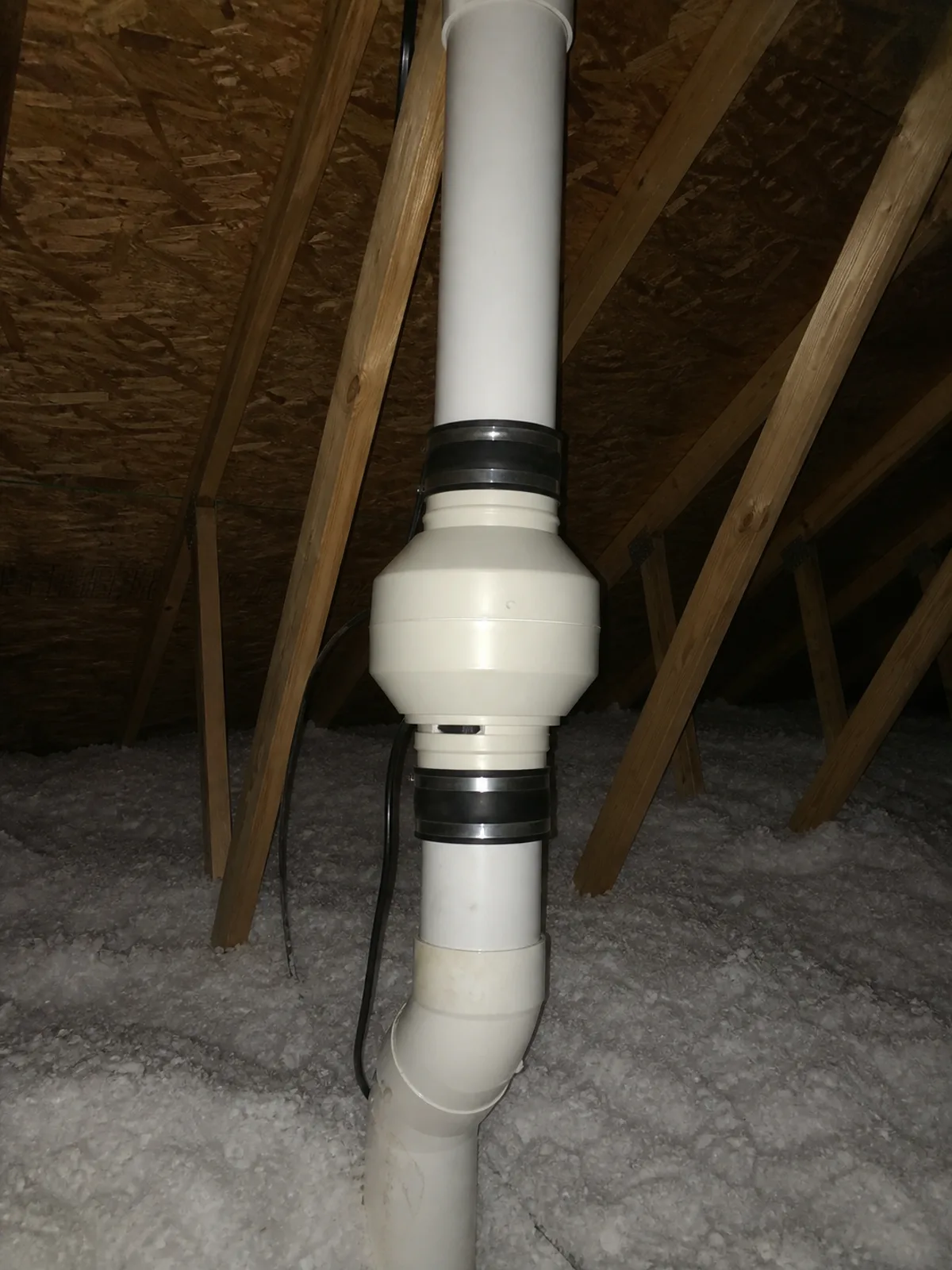
It isn't an evacuate-the-house emergency — radon risk accumulates over years of exposure, not days. But there's no protection while the fan is down, so it belongs on the short list, not the someday list. Getting it scheduled within days or weeks is the right pace.
Handy homeowners sometimes swap fans, but there are real reasons this keeps going wrong: fans must be matched to the system's airflow and suction needs, wiring is involved, and Nebraska licenses radon mitigation work for a reason. A mismatched fan can run happily while leaving your level above the action line — and without a retest, you'd never know.
The fan can be pulling without pulling enough, or pulling from only part of the foundation. Undersized fans, tight soil, unsealed crawl space sections, and slab additions the original system never covered are the usual suspects. That's a system evaluation conversation — describe the house and the numbers.
Most of a system's cost is the installed pipe run, and pipe doesn't wear out. If the routing and sealing were done properly, a new fan usually restores the system for a fraction of a fresh install. Full replacement mainly comes up when the original design was wrong for the house.
One conversation about your test result is enough to find out what fixing it involves. Call or send the quote form — whichever is easier.